How Often Does a Childcare Centre Need Professional Cleaning to Meet Regulations?
A childcare centre needs a cleaning schedule that matches health regulations, risk levels, and daily use of high-touch spaces. In practice, that means some tasks must happen every day, while others should be handled by a professional team on a set cycle to document compliance and reduce the spread of illness.
For most services, professional cleaning is not a “sometimes” extra. It is a planned part of how they meet their duty of care, pass inspections, and keep environments safe for children and staff.
What do regulations actually expect from a childcare centre’s cleaning?
Regulators generally expect childcare centre cleaning practices to keep the premises clean, hygienic, and maintained so they do not pose a risk to children. This includes documented routines, safe chemical use, and clearly assigned responsibilities, not just a tidy-looking room.
To meet those expectations, a childcare centre typically uses professional cleaning to support daily staff cleaning, provide deeper sanitisation, and produce consistent, auditable outcomes.
How often does a childcare centre need professional cleaning in most cases?
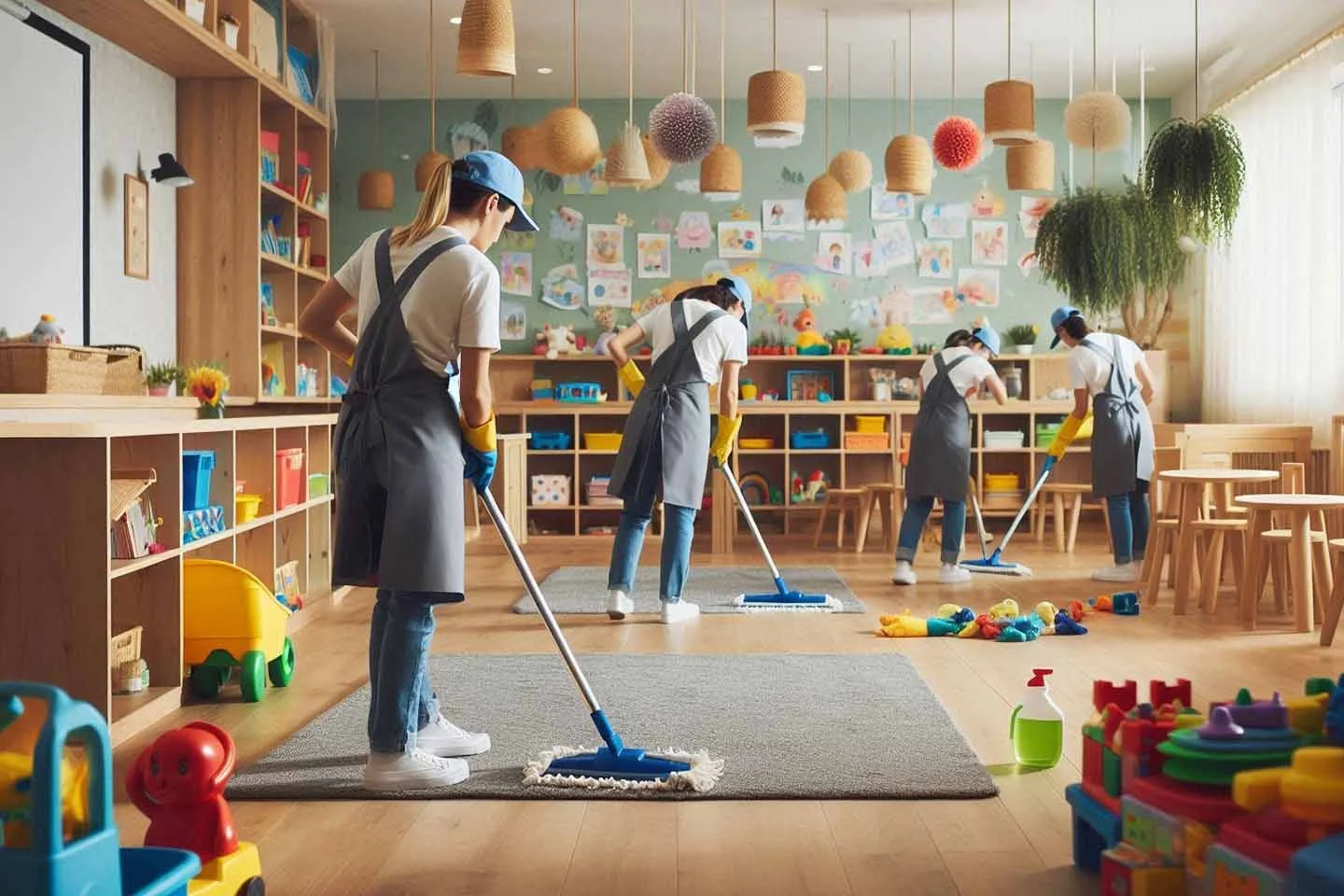
Most centres benefit from professional cleaning at least weekly, with higher-frequency services for larger enrolments or higher-risk layouts. Many services also schedule professional cleaning after hours multiple times per week so educators can focus on care rather than intensive cleaning.
As a baseline, professional cleaning should be frequent enough that bathrooms, kitchens, floors, and touchpoints stay hygienic even during busy weeks.
Which areas should be professionally cleaned every day?
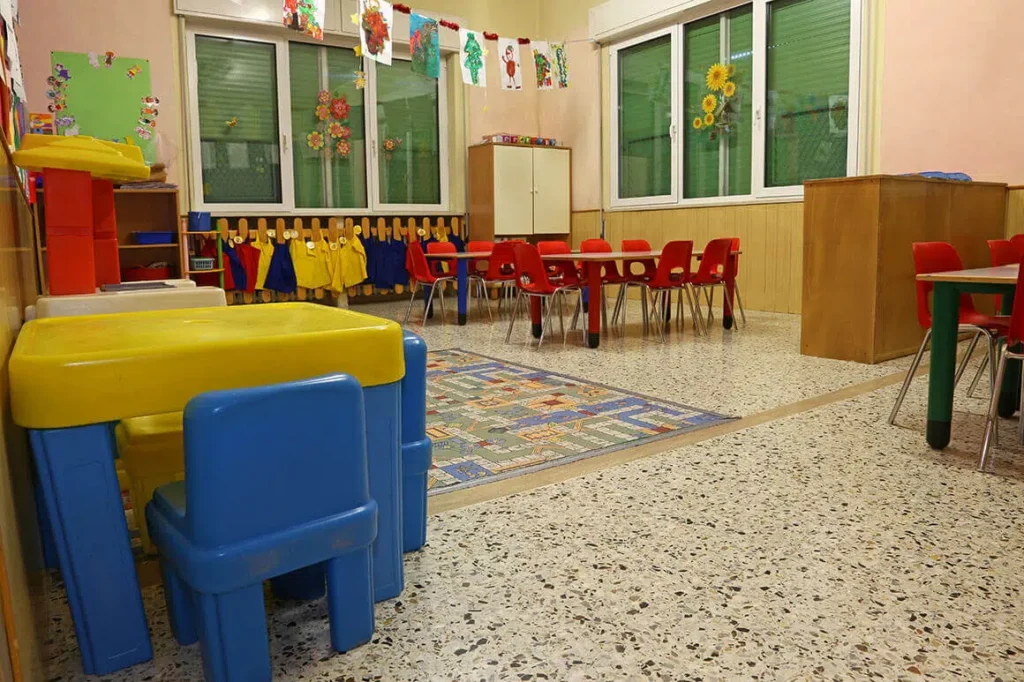
Some spaces are too high-risk to leave to occasional deep cleans. Bathrooms, nappy change zones, kitchens, eating areas, and entry touchpoints often need daily attention, either by staff during the day and/or by cleaners after hours.
Where illness risk is elevated, professional cleaning may be required daily to keep disinfection consistent and to reduce cross-contamination between rooms.
What should be cleaned multiple times a day by educators and staff?
Even with professional support, staff still need daytime routines. High-touch surfaces like door handles, light switches, taps, railings, tables, and shared toys often need wipe-downs more than once per day.
This is not a replacement for professional cleaning. It is a layered approach so grime and germs do not build up between scheduled services.
How often should a childcare centre schedule deep cleaning?
Deep cleaning is usually best scheduled monthly or quarterly, depending on traffic, flooring type, and room density. It covers details that standard visits may not fully address, such as skirting boards, vents, grout lines, behind large furniture, and stain treatment.
A centre using regular professional cleaning can often extend deep-clean intervals because baseline hygiene stays higher week to week.
How do outbreaks and illness spikes change professional cleaning frequency?
During gastro, flu, COVID, or conjunctivitis spikes, centres often increase disinfection and switch to more frequent after-hours visits. They may also add targeted cleans to affected rooms and bathrooms.
In these periods, professional cleaning becomes the centre’s main tool for rapid environmental reset, especially where multiple rooms share common amenities.
How do enrolment numbers and building layout affect cleaning schedules?
More children usually means more bodily fluids, more mess, and more shared-contact surfaces. Open-plan rooms, shared bathrooms, indoor-outdoor flow, and carpeted areas often require more frequent and more specialised services.
Centres with these risk factors usually schedule professional cleaning more often because the environment degrades faster even with strong daily routines.
What evidence should a childcare centre keep to show cleaning compliance?
They should keep cleaning checklists, SDS sheets for chemicals, training records, contractor scopes, sign-off logs, and incident notes when extra cleaning occurs. Documentation matters because “clean enough” is hard to prove without records.
Reliable professional cleaning providers also supply service reports, helping centres show consistent completion of agreed tasks.
What is a practical cleaning schedule that meets expectations?
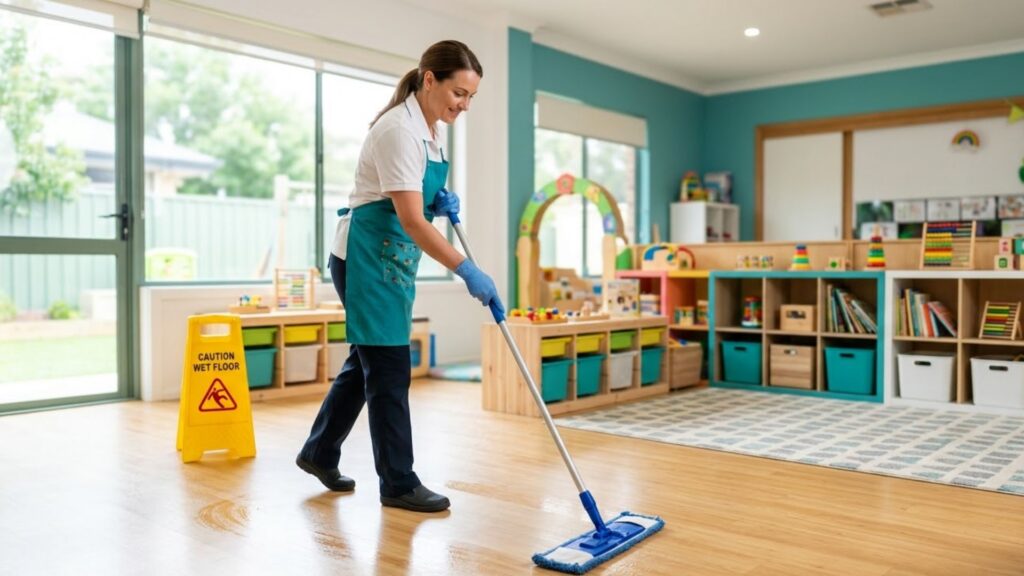
A common approach is: educators handle frequent touchpoint wipes and immediate spills; cleaners handle after-hours bathrooms, floors, bins, kitchen surfaces, and full-room resets; then deep cleans are booked monthly or quarterly.
This structure helps a childcare centre meet routine hygiene needs while ensuring professional cleaning delivers the repeatable standard that audits and families expect.
How much does professional cleaning usually cost for a childcare centre?
Costs depend on hours, frequency, room count, and whether the contract includes consumables and periodic deep cleans. Many services budget weekly or multi-weekly packages and add one-off deep cleans when needed.
Because professional cleaning is ongoing, centres often get better value with a clear scope and schedule rather than ad hoc call-outs.
How can a childcare centre choose the right professional cleaner?
They should look for experience in early learning settings, clear task lists, after-hours availability, safe chemical practices, and consistent reporting. References from similar services help confirm reliability.
Most importantly, the provider should be willing to align professional cleaning to the centre’s risk areas and documentation needs, not just deliver a generic office clean.
How often does a childcare centre need professional cleaning to stay inspection-ready?
Inspection readiness usually requires consistent routines, not last-minute scrambles. Centres that schedule professional cleaning at least weekly, plus targeted increases during outbreaks, are typically in a stronger position to demonstrate hygiene control.
When professional cleaning is regular, documented, and matched to daily staff routines, a childcare centre is far more likely to meet regulations and maintain a safe environment.
Related: Getting Commercial Cleaning Right in Parramatta’s Busy Business Precinct