
What Car Dealership Cleaners Do Differently for Showroom Floors
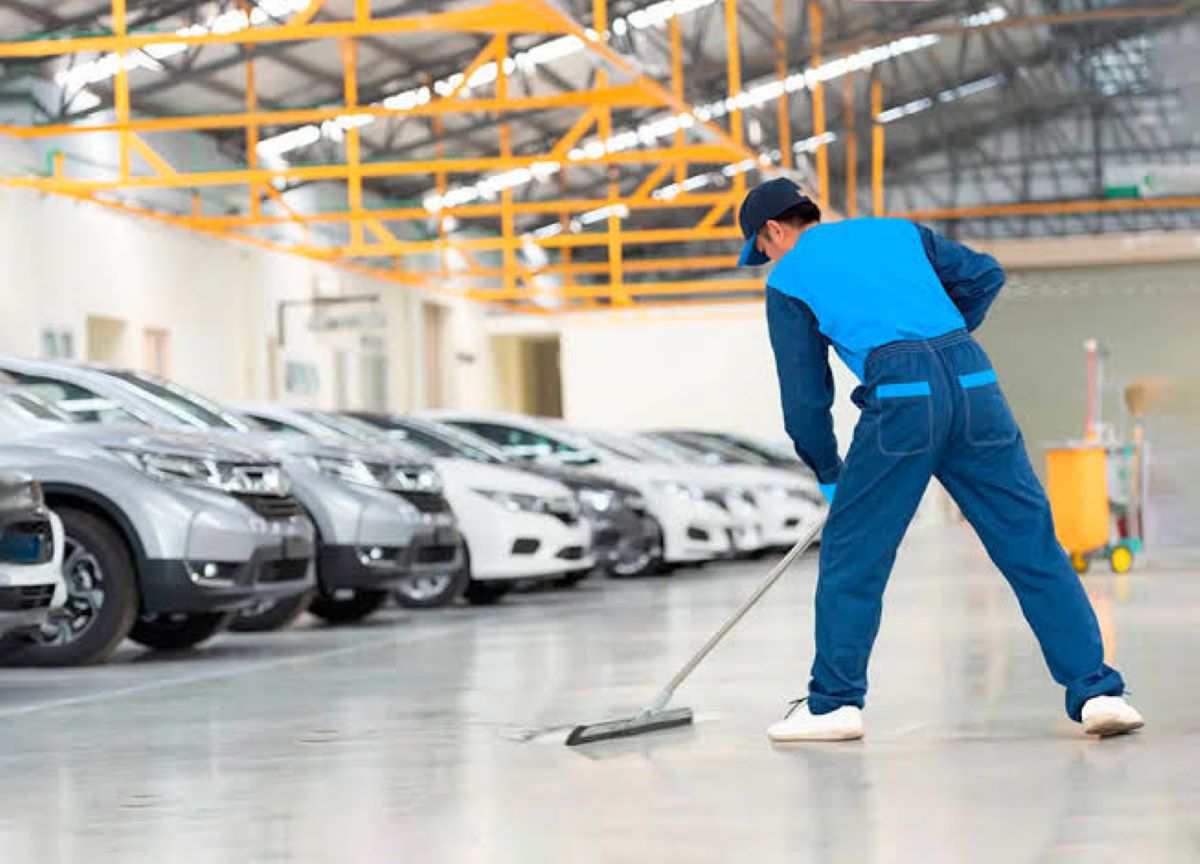
Showroom floors are a sales tool, not just a surface. Car dealership cleaners focus on consistency, safety, and a high-gloss finish that still holds up to daily foot traffic, tyre marks, and Australian weather.
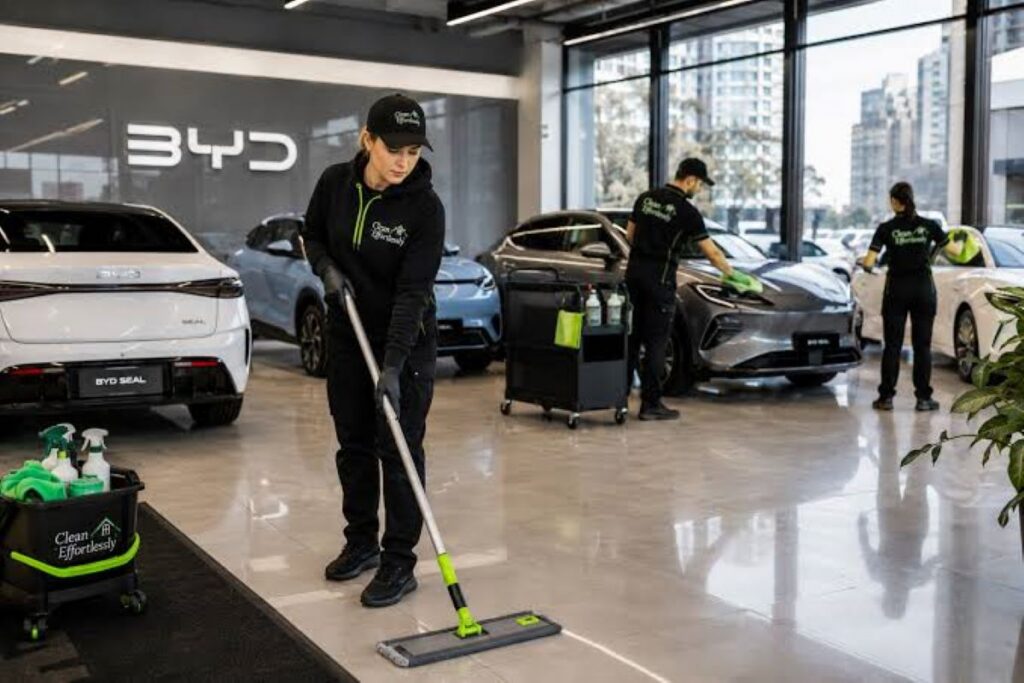
Their approach is less about quick mopping and more about systems. Car dealership cleaners use the right chemicals, machines, schedules, and inspections to keep floors looking “new car day” clean.
What makes showroom floors harder to clean than most commercial floors?
Showroom floors get hit with fine grit, rubber residue, and constant visibility under bright lighting. Car dealership cleaners treat them like high-traffic retail mixed with workshop contamination.
In Australian dealerships, dust from roads and carparks, wet footprints after storms, and salt air in coastal areas can dull a finish quickly. Because every mark shows, they plan for prevention and rapid correction.
How do they control grit and dust before it scratches the surface?
They prioritise soil control at entry points because grit is what causes micro-scratching. Car dealership cleaners often build cleaning around walk-off matting, frequent vacuuming, and dry dust control.
They typically use wide microfiber dust mops and commercial vacuums with fine filtration to remove particles without pushing them around. This reduces swirl marks that become obvious under LED showroom lights.
Why do they avoid “one-size-fits-all” chemicals?
They match chemicals to the floor type and the dealership’s finish expectations. Car dealership cleaners usually avoid harsh degreasers on glossy tiles or sealed concrete unless spot-treating.
On many Australian showroom floors, the goal is to clean without leaving residue that dulls shine or becomes slippery. They use neutral cleaners for daily work, then controlled, floor-safe alkalines only where tyres or oils demand it.
How do they remove tyre marks without damaging gloss?
They treat tyre marks as a specialised stain, not general dirt. Car dealership cleaners commonly use targeted dwell time, soft agitation, and spot tools rather than scrubbing the whole floor aggressively.
They may use non-abrasive pads designed for polished surfaces, plus spot-cleaning techniques that keep the protective layer intact. The aim is to lift rubber without creating patchy sheen differences across the display area.
What equipment do they rely on that most businesses do not?
They lean on machines that deliver consistent results fast. Car dealership cleaners often use auto scrubbers with the correct pad pairing, high-speed burnishers for shine, and microfiber systems for dust control.
They also use edge tools and detail attachments because showrooms have tight zones around cars, desks, and glass. The right equipment reduces manual labour while improving uniformity across large, open floors.
How do they keep floors shiny without making them slippery?
They balance gloss with grip by controlling residues and using the right finish. Car dealership cleaners typically focus on proper dilution, clean water management, and periodic burnishing rather than over-applying product.
Slip risk matters in Australian workplaces, especially on rainy days when wet shoes hit smooth tiles. They reduce risk by removing film build-up, drying floors properly, and choosing finishes designed for commercial traffic.
Why do they clean “to the light” instead of just cleaning to a schedule?
They clean for what customers can see under showroom lighting. Car dealership cleaners inspect from multiple angles because reflections reveal haze, streaks, and missed patches.
A floor can look fine standing over it, then look terrible from the entry or near floor-to-ceiling glass. They adjust technique and timing so the floor reads clean from the customer’s viewpoint, not just the cleaner’s.
How do they manage the difference between showroom and service areas?
They prevent cross-contamination between oily workshop zones and polished display areas. Car dealership cleaners often separate tools, mop heads, pads, and even staff routines so grease does not travel.
They also plan traffic flow, cleaning the cleanest zones first and leaving the dirtiest for last. In many Australian dealerships, the fastest way to ruin a showroom finish is dragging workshop residue onto glossy tiles.
What does a “dealership-grade” daily routine usually include?
They build a routine that stops small issues becoming permanent damage. Car dealership cleaners usually combine dry dusting, targeted spot work, and machine scrubbing as needed, not just a quick wet mop.
A typical day includes entry mat checks, high-frequency dust control in the main display lanes, and rapid response to spills or marks. They also do quick visual checks around key sightlines like the main doors and customer lounge.
How do they handle spills and glass-adjacent streaking?
They treat spills as urgent because liquids can stain, etch, or create slip hazards. Car dealership cleaners use quick blotting, correct chemical choice, and controlled rinsing to prevent residue.
Near glass walls and windows, streaking is more obvious due to strong natural light. They use clean microfiber, change water often, and finish with a clean, damp pass so the floor does not dry with visible lines.
Why do they schedule periodic deep cleans instead of “extra mopping”?
They know daily cleaning cannot remove embedded soil or restore a worn finish. Car dealership cleaners plan periodic restorative work like scrub-and-recoat (where suitable) or burnishing programs to keep shine consistent.
This matters during busy sales periods, EOFY promotions, or new model launches in Australia, when foot traffic spikes. A deep clean resets the floor so daily maintenance stays effective rather than fighting a losing battle.
How do they protect floors during events, deliveries, and car movements?
They plan for the reality that cars move and events happen. Car dealership cleaners often coordinate with dealership staff to time cleaning around deliveries, detailing, and showroom resets.
They may use temporary protection in high-risk paths, increase dust control before doors open, and schedule burnishing after heavy movement days. The goal is to maintain presentation without interrupting sales activity.
What quality checks do they use to keep results consistent?
They inspect like a retailer, not like a back-of-house cleaner. Car dealership cleaners commonly use checklists tied to customer sightlines, plus quick rework rules for streaks, missed edges, and dull patches.
They also track recurring issues, like tyre marks near feature vehicles or dirt lines at entry doors. That data drives changes in matting, cleaning frequency, or spot-treatment methods.
Other Resources : Lifting, pushing and pulling (manual tasks)
How can a dealership tell if their cleaners are doing it properly?
They should see stable shine, fewer tyre shadows, and less haze under lights. Car dealership cleaners who are doing the job well leave floors that look even, feel safe underfoot, and stay cleaner for longer.
A simple test is to look from the entrance at a low angle and scan reflections. If the finish looks patchy, streaked, or dull near high-traffic lanes, the process likely needs better chemistry, pads, or scheduling.
What should they ask before hiring a cleaning team for showroom floors?
They should ask what floor type is being cleaned, what system will be used, and how tyre marks will be treated. They should also ask how the team prevents workshop contamination and manages rainy-day slip risk.
They can request details on equipment, pad types, chemical dilution control, and periodic restorative plans. In Australia, they should also confirm WHS practices and after-hours security procedures for dealership sites.
What is the takeaway for maintaining a “sales-ready” showroom floor?
They keep showroom floors impressive by using prevention, the right tools, and repeatable routines. Car dealership cleaners succeed because they clean for appearance under light, control contamination, and maintain shine without compromising safety.
When done well, the floor supports the cars rather than competing with them. Customers notice the difference even if they cannot explain it, because the whole showroom feels sharper, cleaner, and more premium.
More to Read : How Car Park Cleaning Schedules Work Around Peak Traffic Hours