What Should You Expect from a Commercial Cleaning Company on a Construction Site?
A commercial cleaning company on a construction site should deliver safe, compliant, and clearly scoped cleaning that supports handover, reduces hazards, and keeps the project moving. They should also communicate well, document what they have done, and work around trades without getting in the way.
The best results come when the builder and the commercial cleaning company on a construction site agree the scope early, then review it as the build progresses.
What is the difference between builders clean, rough clean, and final clean?
They should explain the stages in plain terms and match labour to the site’s timeline. A commercial cleaning company on a construction site will usually offer a rough or initial clean to remove heavy debris, a builders clean to detail surfaces, and a final clean for presentation before occupancy.
They should also clarify exclusions, because many disputes come from assuming specialist tasks are included.
What safety and compliance standards should they follow on site?
They should meet site WHS requirements, follow induction rules, and use appropriate PPE and signage. A commercial cleaning company on a construction site should also have insurances, safe work method statements, and a process for handling sharps, broken glass, and other hazards.
They should not create new risks, such as trailing leads, wet floors without warnings, or blocking fire exits.
What should be included in a clear scope of works?
They should provide a checklist that defines areas, inclusions, exclusions, and the standard of finish. A commercial cleaning company on a construction site should specify what they will do to floors, walls, windows, joinery, amenities, and external areas, plus whether they will remove stickers, silicone haze, paint spots, or grout residue.
They should also state whether waste removal includes skips, tipping fees, and recycling.
How do they handle construction dust and debris properly?
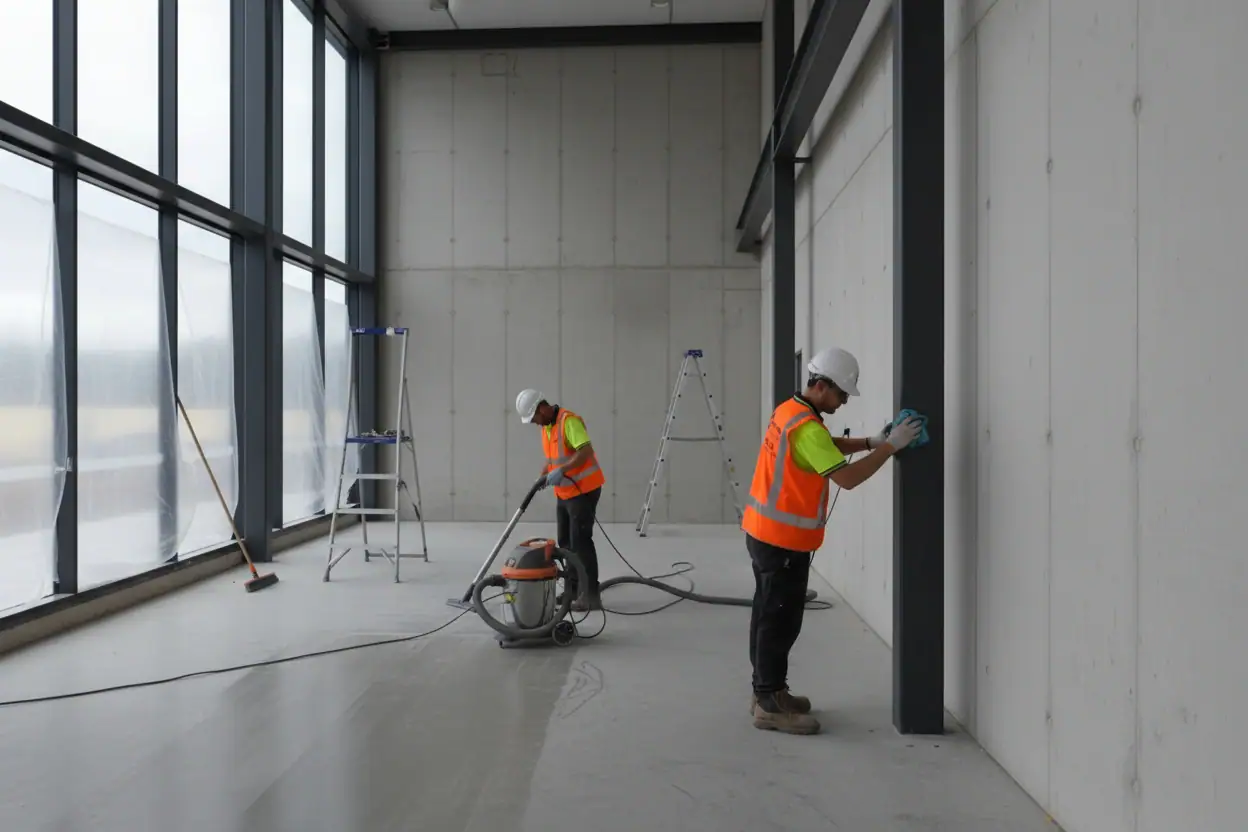
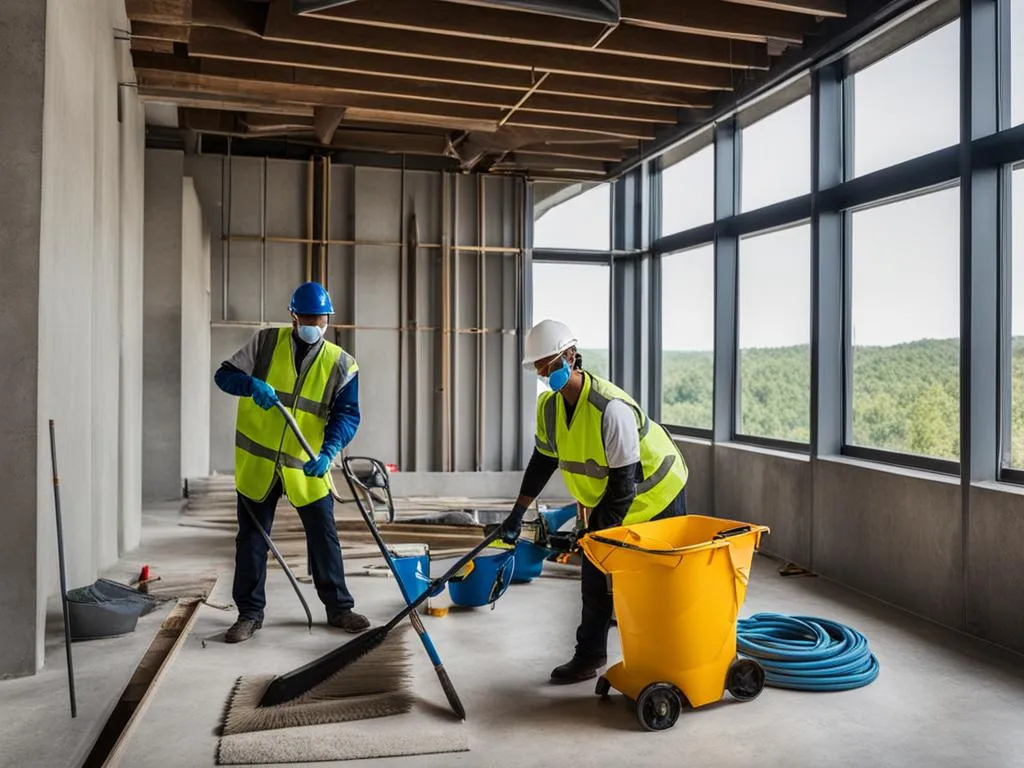
They should remove loose debris first, then control dust using commercial vacuums with suitable filtration, followed by damp wiping where appropriate. A commercial cleaning company on a construction site should avoid dry sweeping that spreads fine dust throughout the building.
They should also clean high and low, because dust settles on ledges, frames, duct surrounds, and inside cupboards during fit-out.
What equipment and products should they bring?
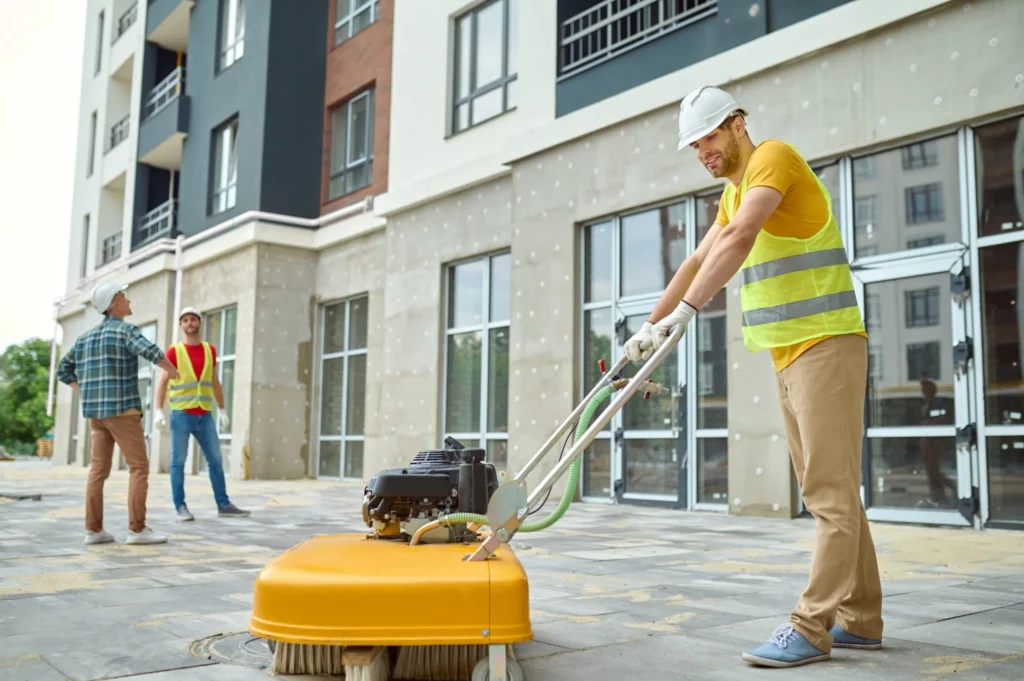
They should arrive with industrial vacuums, floor scrubbers where needed, extension tools for high areas, and safe chemicals matched to the surfaces. A commercial cleaning company on a construction site should use products that will not etch glass, dull stainless steel, or damage stone, paint, and timber finishes.
They should also label chemicals correctly and store them safely while on site.
How should they protect finished surfaces and new installations?
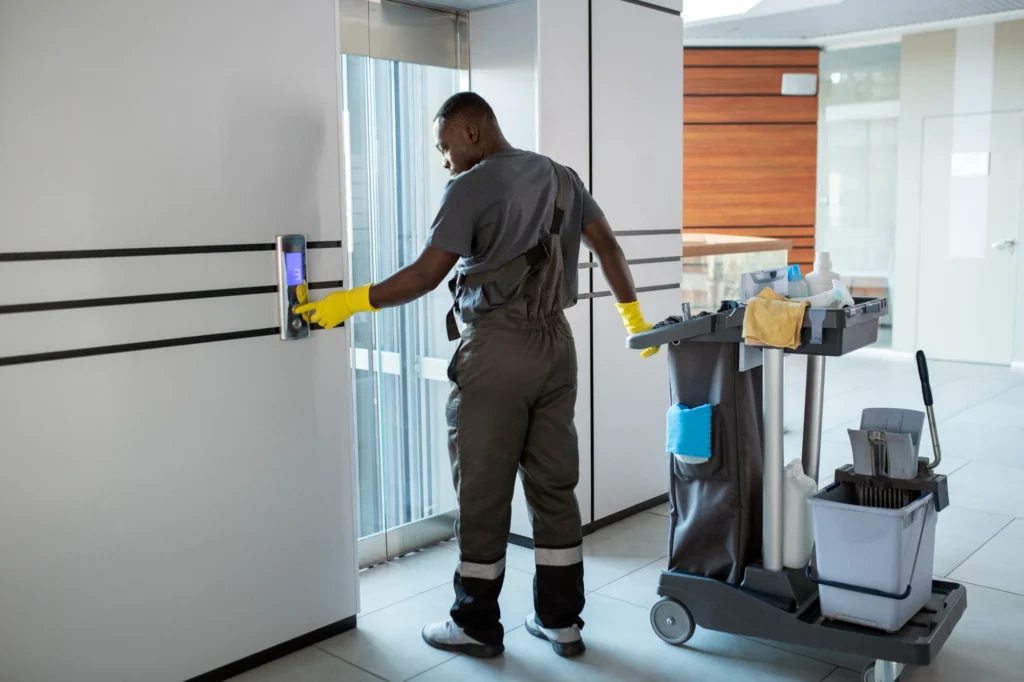
They should work carefully around fresh paint, new flooring, and newly installed fixtures. A commercial cleaning company on a construction site should use non-abrasive pads, test products in an inconspicuous spot, and avoid over-wetting materials that can swell or stain.
They should also report defects they notice rather than trying to hide them, since that can create disputes at handover.
What level of communication and scheduling should you expect?
They should confirm dates, hours, access requirements, and trade coordination in writing. A commercial cleaning company on a construction site should ask who controls keys, lifts, alarms, and water and power, and they should flag constraints early, such as cure times for sealants or floors.
They should also provide a contact who can make decisions quickly if the scope changes.
What quality checks and documentation should they provide?
They should do a walk-through against the agreed checklist and fix items before calling the job complete. A commercial cleaning company on a construction site should be able to supply photos, sign-off sheets, and notes on any limitations, such as areas still under active work.
If the site requires it, they should also support audits by recording chemical use, SWMS compliance, and incident reporting.
How should waste, recycling, and hazardous materials be managed?
They should sort and remove waste in line with site rules and local requirements. A commercial cleaning company on a construction site should clarify whether they are moving waste to on-site skips or organising disposal off-site, and what is included in the price.
They should never dispose of hazardous materials without authorisation, and they should escalate anything suspicious immediately.
What should you expect around pricing and variations?
They should quote based on an inspection or detailed drawings, not guesses. A commercial cleaning company on a construction site should separate labour, materials, equipment, and waste costs, and clearly explain what triggers a variation, such as extra floors opened up, rework after other trades, or late access.
They should also set expectations about return visits because construction sites often need touch-ups near handover.
What are the common red flags to watch for?
They should not be vague about inclusions, unwilling to inspect the site, or unable to show insurance and safety paperwork. A commercial cleaning company on a construction site should not promise unrealistic timeframes that ignore site constraints or rely on harsh chemicals to force results.
Another red flag is poor coordination, such as arriving without access, failing to protect surfaces, or leaving areas partially complete without notice.
How can a site team help them deliver the best result?
They should be given clear access, a confirmed schedule, and a single point of contact. A commercial cleaning company on a construction site works best when trades have finished messy tasks, defects are identified, and areas are released in logical zones.
They should also be told upfront about sensitive finishes, client presentation standards, and any specific handover requirements so the clean matches the final inspection.